Sunday, May 13, 2012

Ocean News & Technology Magazine said it best on their front cover : AUTONOMOUS UNDERWATER VEHICLES, PROVEN WORK HORSES FOR THE UNDERWATER INDUSTRY


We see, and we believe, that Autonomous Underwater Vehicles (AUV's) will soon be one of the most important sectors in the entire field of operations and research beneath the surface of our oceans and waterways. There is currently, and for the foreseeable future, a significant shortage of personnel trained in these areas, so when considering the need for education and training in the technology of the seas --- in the broadest sense --- our strongest recommendations would focus on these technologies.

Unmanned Underwater Vehicles (UUV's) include two sub-categories : An autonomous underwater vehicle (AUV) is an underwater robot that can navigate on its own without any control or input by a human operator and  remotely operated underwater vehicles (ROVs) which are controlled and powered from the surface by a human, called variously the operator or the pilot, by means of electronic signals transmitted through the umbilical or using some other means of communication. In addition to the transmission of control signals, the umbilical also may transmit sensor and other recording data information back up to the surface .
History
The first AUV's were developed beginning in 1957, and was at that time designated as a "Special Purpose Underwater Research Vehicle", or SPURVused in the study of submarine wakes . Russia and other countries were developing this technology at the time, although this University of Washington research was the first to be acknowledged publicly in the scientific literature. 
Applications
Until the technology became more fully developed, and that occurred fairly recently, the tasks assigned to AUVs were limited in number . Advanced sensor capabilities, an infrastructure of acceptance by users, and development of power supplies necessary for effective use have grown so that both civilian and military uses are being found for them.
Commercial
The major uses, and the ones most readily supported by the economics of the situation, are by the oil and gas industry. Before underwater drilling for oil and gas can begin, detailed purpose-built maps of the seafloor are required . The need for this highly specialized charting must exist before the company builds the very complex, heavy structures of their subsea infrastructure; pipelines and sub-sea installations are designed in the most cost effective manner with minimum disruption to the environment. The AUV can conduct precise surveys of areas where traditional bathymetric surveys would be not as effective or too expensive. AUV's also make it possible to conduct surveys after the pipe is laid.
Military
AUV's are typically used by the military services to map an area for mines, or to monitor a harbors for new unidentified objects. AUVs are also employed in anti-submarine warfare, to aid in the detection of manned submarines. 
Research

The University of South Florida has established a fair-sized oceanic research campus on the South end of St. Petersburg, Florida, as part of a significant marine science complex, which is, incidentally, just across the Sunshine Skyway Bridge from our home base. Indeed, the Editor of this Blog was a Program Assistant there when Admiral William (Bill) Behrens, the former Oceanographer of the Navy, was the Director of the Florida Institute of Oceanography there.
Scientists use AUVs to study lakes, the ocean, and the ocean floor. A variety of sensors can be affixed to AUVs to measure the concentration of various elements or compounds, the absorption or reflection of light, and the presence of microscopic life. Additionally, AUVs can be configured as tow-vehicles to deliver customized sensor packages to specific locations.

Hobby
Many roboticists construct AUVs as a hobby. There are several competitions in which AUVs constructed at home or in school projects can compete against each other.[2][3][4] Like commercial AUV's, these robot subs can be fitted with cameras, lights, or sonar. Because of the limited resources of the school systems and the inexperience of the builders, hobbyist AUVs can rarely compete with commercial models on such parameters as operational depth, durability, or sophistication. Furthermore, hobby AUVs are usually not oceangoing, nor do they dive to any significant depth, usually operating in pools or lakes. A simple AUV can be constructed from microcontrollers, PVC pressure housing, relays, and other small parts obtainable in hobby shops or local hardware stores.[5]

Vehicle designs

Hundreds of different AUVs have been designed over the past 50 or so years,[10] but only a few companies sell vehicles in any significant numbers. There are about 10 companies that consistently sell AUV's internationally : Kongsberg Maritime, Hydroid (now owned by Kongsberg), Bluefin Robotics, Teledyne Gavia (formerly known as Hafmynd), and International Submarine Engineering (ISE) Ltd.
Vehicles range in size from lightweight AUVs that one man can lift to large diameter vehicles of over 32 feet (10 meters) in length. Large vehicle have advantages in terms of endurance and sensor payload capacity; smaller vehicles benefit significantly from lower logistics (for example: support vessel footprint; launch and recovery systems).
Some manufacturers have benefited from domestic government sponsorship including Bluefin and Kongsberg. The market is effectively split into three areas: scientific (including universities and research agencies), commercial offshore (oil and gas etc.) and military application (mine countermeasures, battle space preparation). The majority of these roles utilize a similar design and operate in a cruise (torpedo-type) mode. They collect data while following a preplanned route at speeds between 1 and 4 knots.
Commercially available AUVs include various designs such as the small REMUS 100 AUV that was developed originally by the Woods Hole Oceanographic Institution and now produced commercially by Hydroid, Inc.; the larger HUGIN 1000 and 3000 AUVs were developed by Kongsberg Maritime and the Norwegian Defence Research Establishment; the Bluefin Robotics 12-and-21-inch-diameter (300 and 530 mm) vehicles and the International Submarine Engineering Ltd. Explorer. Most AUVs follow the traditional torpedo shape as this is seen as the best compromise between size, volume, hydrodynamic efficiency, and ease of transportation. Some vehicles are designed to make use of modular components which can be interchanged easily.
The market is changing so that designs are now following commercial requirements. Future designs include hover-capable AUVs for inspection and light-intervention (primarily for the offshore energy applications), and hybrid AUV/ROV designs that switch between roles as part of their mission profile. Commercial markets are, not surprisingly, driven by financial requirements, as the goal is to save money and expensive ship time.
While most current AUVs are capable of unsupervised missions, most operators remain within range of their operators so that they can maintain a close watch on these expensive, and in some cases classified, products. This is not always possible in Arctic environments when geopoliticaly-vital sea floor surveys are being made by the governments involved, such as when Canada recently used two ISE Explorer AUV's to survey the sea floor underneath the Arctic ice in support of their of sovereignty claims under the United Nations Convention of the Law of the Sea. Also, increasingly, very low-power, long-range variations such as underwater gliders can operate unattended for weeks or months in littoral and open ocean areas, relaying data by satellite to a base on shore, before returning to home base.
As of 2008, a new class of AUVs are being developed, the biomimetic (imitating nature) . Currently in experimental stages, these bionic vehicles can achieve high degrees of efficiency in propulsion and maneuverability by copying successful designs in nature. Two such vehicles are Festo's AquaJelly and Evologics' Bionik Manta.

Saturday, May 12, 2012

PHILIPPINE SEAFARING INDUSTRY --- ON THE EDGE By: Capt. Alvils, 12 April 2012

We have not asked Captain Alvils --- of the Philippine Maritime Service --- who is clearly a master mariner of long service and high integrity, for permission to reprint his comments on maritime education and training. We do not wish to violate international copyright laws, but we found his remarks so compelling and heartfelt, and so relevant to our own message, that we are taking the liberty of reproducing his latest writings here as an example of what can happen when a country does not carefully monitor its standards of training and certification for maritime personnel, in the hope and expectation that he will grant us reprint permission after the fact .
We are confident that his public comments, reproduced below with very minor editing, will serve as a beacon of light for those concerned with maritime education and training everywhere :
The Philippine seafaring industry is in a precarious situation. The country stands to lose not only millions of dollars of annual remittances but also employment opportunities for hundreds of thousands of Filipino seamen hired by European flagged vessels unless corrective measures on maritime standards are complied with, particularly the elimination of schools and training institutions offering inferior-quality maritime education.

March 7 to 14 2012, European Maritime Safety Agency (EMSA) officials conducted an inspection visit, the fourth one of this kind since 2006, to check the compliance of Philippine maritime schools, training centers and government measures with standard rules. The results were very alarming, not only for our shipping and seafaring industry but for the entire nation as well. The majority of our maritime schools and training institutions continue to incur deficiencies, some --- especially those located outside metropolitan Manila and outlaying provinces --- operate in substandard conditions, i.e. inadequate equipment, incomplete facilities, lack of academic systems and standards, instructor’s guide, teaching aids, books, unqualified teaching staffs, etc.
The Department of Labor and Employment (DOLE) explained that the failure of the Philippines to rectify deficiencies pointed out by EMSA will trigger the European Commission’s withdrawal of the European Union's recognition of certificates issued by the Philippine government to Filipino seamen that will result in the refusal of EU flagged vessels to hire Filipino seafarers.

It also follows that the withdrawal of EU’s recognition could threaten the position of the Philippines in the International Maritime Organization (IMO) “white list” countries that are compliant with the International Convention on Standards of Training, Certification and Watchkeeping (STCW) for Seafarers and will definitely have a detrimental effect not only on the country’s reputation in the international maritime community but also on the nation’s economy.

Labor Secretary Rosalinda Baldoz said, “We welcome this follow up visit of EMSA as an opportunity for the Philippine government to prove its efforts to continuously improve its maritime education, training and certification system,” . Adding, “We have already met and coordinated with all concerned parties involved in the follow up visit to ensure the corrective actions previously reported to EMSA are being implemented.”

But her statement is more of a lip service to appease the EU inspectors rather than genuine measures to address the deteriorating system of Philippine maritime education.

As early as 2006, EMSA audit findings already showed that Philippine maritime schools were non-compliant with STCW 78 (as amended). Government agencies alluded to the proliferation of “fly-by-night” maritime schools due to high demand of seafarers abroad. Any schools can offer maritime related courses so long as they can complete documentary requirements and meet the minimum standards set by Commission on Higher Education (CHED). They are often allowed to exist despite operating below the minimum standard, albeit under provisional status, provided they can rectify their deficiencies by next inspection. More often than not, no one does; they simply request an extension of deadline from the CHED . The latter, for so long, have continuously tolerated this blatant disregard and circumvention of rules lest they displace thousands of students, whose only ambition in life is to one day be a seaman, if they close down a non-compliant maritime institution.
“They operate with impunity, prioritizing income more than academic standards and without fear of reprisal from CHED, the lone government agency that regulates maritime education”, said one maritime educator.

While EMSA inspectors confirmed that the authorities and maritime education institutions did take appropriate actions to correct the presumed deficiencies, the actions taken were unsatisfactory.

In relation to the maritime administration, some corrective actions have not been taken. These are:

1. The quality of standards system in place at the MTC, TESDA and CHED;
2. The program and course review procedure in place at CHED;
3. The implementation and monitoring of on-board training;
4. The validation of the training record book; and
5. The implementation of the management level courses (MLC).

The MLC had been approved in 2005 but not implemented at the time of the 2006 inspection. During the inspection, EMSA inspectors established that the content of the programs did not fully comply with the relevant standards of competence required in tables A-II/2 and A-III/2 of the STCW Code. Considerable numbers of items of the code were omitted. Furthermore, the EMSA inspectors confirmed that the majority of the candidates were exempted from completing the program, the reason being that the MTC and PRC consider seagoing service as equivalent to education. For this purpose, the MTC has approved, through Resolution No 5, series 2009, a table of equivalency that was used to exempt candidates from attending the full program. However, the STCW Convention does not permit such equivalence.

In relation to maritime institutions, the EMSA inspectors established that some corrective actions had not been taken or were not satisfactory. These are:

                                           Philippine Maritime Institute

Ø Quality Management System (QMS) - With the exceptions of internal audits and management reviews, no action taken;
Ø Training equipment - Still missing, not adequately used, or creating safety hazards;
Ø Simulators - Insufficient number of exercises, inappropriate training objectives and performance criteria, no evidence that testing and validation of training exercises had been conducted.

                                                 University of Cebu

Ø Training equipment - The equipment installed in the laboratories used by the regular students (those not enrolled in the Norwegian program) in electrical, electronic, and control engineering did not allow them to acquire the skills and to demonstrate competence in those domains. This was the same equipment that was in use at the time of the 2006 inspection.

                                                 University of Visayas

Ø Training equipment - Preventive maintenance was not conducted;
Ø The equipment used in the electronic and electro technical laboratory, that was in use at the time of the 2006 inspection, was inadequate for basic understanding and gaining practical skills;
Ø The system implemented in the steam plant machinery workshop was intrinsically unstable, with a dangerous risk of uncontrolled over-speed;
Ø Simulators - The number of Radar/ARPA exercises was still insufficient to cover training in the necessary skills -– only two exercises with two and three targets, respectively –- and there were no exercises developed for the GMDSS simulator.

Had the EU inspectors visited maritime schools outside Metropolitan Manila, they would have been horrified by their findings.

CHED, MTC , TESDA, POEA and other government institutions involved in maritime training, education and employment continue to be headed by government appointees who have no knowledge whatsoever about shipping and seafaring. The implication is that seafarers and the STCW itself are chiefly an employment matter. Exporting labor may be essential to keep the economy going but placing seafarers' concerns under the auspices of government administrators, and equating shipping, seafaring, and maritime affairs with an ordinary government office is a misguided policy.

If the government continues to group seafarers together with land-based migrant workers, the result will be catastrophic for the country. The merchant marine profession and the shipping industry in general have a technological dimension that is beyond the field of expertise of a labor secretary or a highly regarded political appointee.

For many years, concerned seafarers have been imploring the government to set politics aside and to leave shipping and seafaring to experts. It is a proven fact that for many decades CHED and MTC could not function without the aid of expert mariners from the private sector whom they continue to engaged as volunteers to constitute its technical working group (TWG).

For the nth time, I wish to reiterate to our lawmakers the following solutions (perhaps the only solutions) to completely eliminate the cause of malaise that afflicts this seafaring and maritime nation:

1) Create a “Maritime Department” section under CHED composed of Master Mariners, Chief Engineers and Marine deck and engine officers with Masters and Doctorate degrees. It is obvious that the people who have these qualifications are the members of its technical working group;
2) Amend the existing laws on Filipino Migrant Workers Act (RA 10022). It has remain detrimental and unfavorable to the business of manning and seafaring. It was passed into law without considering its negative effect on the maritime industry;
3) Separate/segregate sea-based from land-based employment. Because of the stringent requirements of the International Maritime Organization (IMO) Convention on STCW, where the Philippines is a party to this convention, not to mention the time spent on maritime education, rigorous training, and the complex process of licensing and certification, sea-based education needs to have its own identity, different from that of ordinary Overseas Foreign Workers (OFW). To attain this objective, we need to revive the defunct National Seaman’s Board (NSB), formerly in charge of deployment of seafarers, and managed by people knowledgeable in shipping and seafaring.
4) Replace the head of MARINA, MTC and TESDA with people who have extensive sea experience and full knowledge of various international conventions, rules, and shipping laws, particularly an experienced Master Mariner with excellent supervisorial and managerial skills.

It is not so difficult to search for the right person for the job and to find the courage and political will to initiate reforms and replace these incumbent government officials.

Those who perceive and brag that Filipino seafarers are indispensable because of their dominant numbers should have their heads examine. We don’t own the ships, but only serve at the pleasure of its owners. We cannot continue to ignore and defy convention rules that ship owners themselves ratified and pledged to abide, nor will the ship owners compromise the safety of their vessels in exchange for numerical superiority.

The threat of EMSA and the dire consequences of being delisted from IMO’s “White List” are similar to the Fukushima nuclear meltdown. Unless an immediate solution is found, there will be chaos in Luneta Park and our supposedly productive seafaring industry will end up at the bottom of the pit.
Captain Alvils is a third-generation Master Mariner (His Grandfather and father are master mariners) and, in turn, has raised two sons who are also now both Master Mariners. A graduate of PMI college (Class 67), he served 7 years with the Maritime Company of the Philippines (MCP) and 25 years with the Sanko Line, of which 6 years were as Master Mariner. He served as Port Captain and Operations Manager of various shipping companies, and is presently the Operations Manager of PVI. In addition , he is President of the Bataan Seaman's Association and Bukluran Marinong Pinoy. An author of books, including "International Regulations for Collision at Sea (explained and illustrated)", "Maritime English", "Chartering Terms and Abbreviations", and "Bulk Cargo Operations", he was awarded the prestigious honor of being named as one of the Most Outstanding Seafarers of the Year 2009.
Given the length of his maritime experience and the significance of his accomplishments, and as a citizen of one of the most seagoing nations in the world, we would think that his words and opinions should be given the attention, weight, and respect that they deserve.

MARITIME INSTITUTE, AFLOAT AND ASHORE

This BLOG proposes the establishment of a regional Maritime Institute, a major maritime professional and educational center based in an area with highway and water access to existing facilities, in particular, the extraordinary complex of maritime oceanographic activities that exist today in the Greater Tampa Bay region.
These shore-based facilities could be supplemented by a Maritime Institute Afloat, which would involve scheduling appropriate Institute activities aboard one or more vessels (seaworthy but not necessarily seagoing) acquired for the purpose, and tied up dockside as ancillary --- and relatively inexpensive --- facility space, whose bridge, deck machinery, and engine room could provide realistic equipment for instructional use in their maintenance and repair.

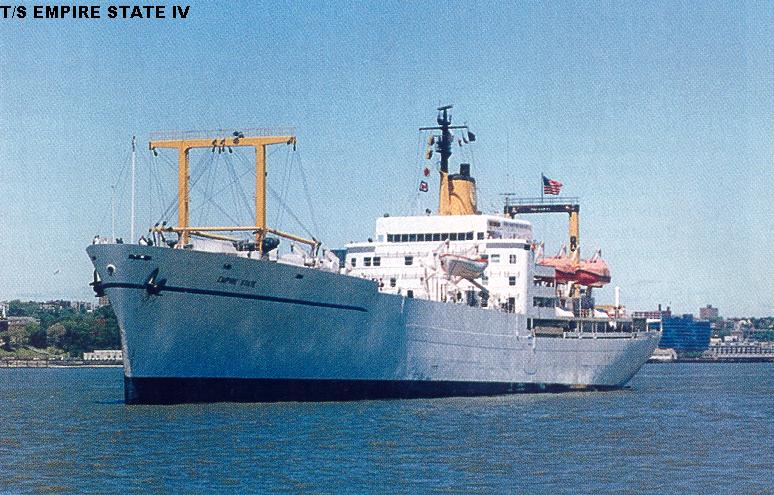
Empire State VI, the training ship of the N Y State Maritime Academy
Florida : A great place for it to head for and tie up                                   during the very cold winter season in New York


The Institute would offer a wide spectrum of programs that meet the needs of the maritime profession, including :     
a. Career education (what used to be called Vocational Guidance) to the region as a whole. The general population does not know or understand the critical problems facing the nation's maritime activities. Public awareness is the first step. Recruiting and guidance should take place using modern creative techniques like the Social Media to an audience with a broad demographic profile : from secondary school students all the way up through mature unemployed and (the often neglected) under-employed adults.
         ... and a component that encourages people to consider maritime careers that can extend far beyond traditional careers at sea, using local courses and resources already in place . For example, the University of Tampa offers courses in international trade and commerce; Stetson University's School of Law could provide courses in the fields of traditional Admiralty Law, evolving international Maritime Law and the Law of Salvage, taught by qualified, experienced instructors. The Institute could offer these courses --- modified for working mariners and professionals in the marine insurance industry, work which requires familiarity with complex technical and operational issues .
b. Professional maritime certification and upgrade programs could be made available locally -- and therefore conveniently --- at the Institute's own facilities, using portable plug-and-play courses that meet strict Coast Guard standards, and that are currently offered at other locations around the country by State and Federal maritime academies and private proprietary schools.
    Courses leading to Coast Guard Certification in today’s professional maritime career field, and appropriate for a modern Maritime educational institution are outlined below .
c.  Courses in international trade, the Law of Salvage, and admiralty law, designed to be easily understood by working professional mariners who don't have a legal background, yet whose daily decisions on the job must rely on a working knowledge of the legal implications of these complex fields.
d.  A comprehensive understanding of Intermodal Port Operations
    e.  Finance, Accounting, Economics, Chartering & Brokerage, Internet and e-Commerce, Social Media Marketing, International Law of the Sea, Logistics & Supply Chain Management,Admiralty Law, and Marine Insurance are examples of other fields which help maritime-trained and -oriented students meet meaningful shore-based occupational requirements.

     f. Another unusual and neglected field concerns the Geopolitics of the Circumpolar regions. Familiarity with these areas is of increasing importance given the demonstrable melting of the Polar icecap, which will make the once-fabled Northwest Passage increasingly available to intercontinental shipping between Asia and Europe. 
         Maritime interests have begun establishing research and shipping facilities in near-Polar areas such as Newfoundland and Nunavut, because of the discovery of vast deposits of rare metals and other critical mineral resources found under the once-neglected tundra.            

Illustrative of the growing recognition accorded to northern regions by other nations is the get-together of ocean technology representatives and agents from the United Kingdom, Italy, and Spain sponsored by Canada's Department of International Trade, that was held recently in Nova Scotia and Newfoundland . The topic was Inbound European Ocean Observing, and appears to be just one of a series on ocean technology, with a priority on ocean observatories, demonstrating rapidly growing interest in the near-Arctic and the interest in Atlantic Canada as a technology Center of Excellence .

The presentations were by OceansAdvance, the new and very active organization promoting the Newfoundland and Labrador ocean technology cluster . The latter is a group of state-of-the-art marine research facilities in the Atlantic Provinces of Canada, fostering interest in forming and supporting networks at the highest level . They are encouraging technology transfer and expanded research partnerships with the newly established centers of excellence in areas of Canada that were once considered not much more than harsh and non-productive environment .

All this new focus is the result of the discoveries of vast power sources and rare earth minerals in the region, concomitant with their growing need by new high technology devices . Yet there appears to be little knowledge, recognition, understanding, or effort in the United States in developing our common interest in these resources with Canada, our closest and friendliest neighbor, outside of how it affects investment and financial exploitation for immediate profits in our security markets.      
                                                                                                                                                               g. State-of-the-art Bridge Simulators and Engine Room Simulators,   using new, improved, highly-sophisticated equipment that, like airplane simulators, teach important ship management skills while safely on the ground. These would rely on the interests and benefit from the skills that many young people have acquired through computer gaming. 
h.  Providing Sea Time --- on-the-water log book time required to fulfill               requirements in many professional upgrades and certification
i.  Vocational training in
    (1) advanced welding techniques,
    (2) advanced diving techniques,
    (3) advanced vessel inspection techniques,
    (4) port security and counter-terrorism,
    (5) towing and salvage operations
    (6) undersea oil and gas drill rig operations
         Two years after the Deepwater Horizon accident killed 11 men and sent  oil spewing into the Gulf of Mexico, the oil industry says it has learned valuable lessons from the disaster that are making drilling safer today.
But there's still a pressing issue looming for the oil industry: Oil field workers are retiring in huge numbers, leaving a workforce that's younger and — more importantly — less experienced. Dubbed "the great crew change" in the industry, the staffing challenge comes even as crews venture into places where drilling is more difficult, like the Arctic and deep below in the world's oceans .
     j.  Fuel Cell theory and practice --- technical understanding of these advanced technologies in power generation will be increasingly in demand given their increasing use in all applications of power generation, such as powering electrical motors directly from hydrogen, LNG, or ammonia, emitting only completely benign waste products. The theory and practice of this field are many decades ahead of the average modern mariner.
    k.  A Maritime Charter School --- beginning the maritime educational experience early :
         Charter schools are primary or secondary schools that receive public money (and like other schools, may also receive private donations) but are not subject to some of the rules, regulations, and statutes that apply to other public schools in exchange for some type of accountability for producing certain results, which are set forth in each school's charter.
         Charter schools are attended by choice. While charter schools provide      an alternative to other public schools, they are part of the public education system and are not allowed to charge tuition. Where enrollment in a charter school is oversubscribed, admission is frequently allocated by lottery-based admissions systems. However, the lottery is open to all students. In a 2008 survey of United States averaging 198 students.
         Some charter schools provide a curriculum that specializes in a certain       field—e.g., arts, mathematics, or vocational training. Others attempt to provide a better and more efficient general education than nearby public schools. Charter school students take state-mandated exams.

         Some charter schools are founded by teachers, parents, or activists          who feel restricted by traditional public schools. State-authorized charters (schools not chartered by local school districts) are often established by non-profit groups, universities, and some government entities. Additionally, school districts sometimes permit corporations to manage chains of charter schools. The schools themselves are still non-profit, in the same way that public schools may be managed by a for-profit corporation. Corporate management does not affect the status of a school.
         In the United States, though the percentage of students educated in      charter schools varies by school district, only in New Orleans are the            majority of children educated within independent public charter schools.

Enabling legislation for Florida is already in place; the Governor and the current Florida state administration have indicated support; the population served : high school age youth who reject the conventional go-to-college route and are faced with an otherwise bleak future. They could be trained for a career in a field with demonstrable world-wide job opportunities at sea and ashore. 
         The facilities and the location would provide strong motivation;          operational costs would be borne by the County school system on a per-pupil basis; higher education opportunities abound, including first rate college education at no cost at accredited 4-year service academies. The curriculum of this Charter School might be tailored to provide one or more of the following certifications, upon successful completion of the program :
         (1)  Certification as an Able Seaman to US Coast Guard and  Maritime Administration (MARAD) standards
         (2)  Sea time aboard an Institute ship or other qualified vessel
         (3)  Commercial Marine Radio-Telephone License, Radar Endorsement
         (4)  Such practical certifications as fit comfortably into the curriculum, such as Basic Safety Training (First Aid, Fire Fighting,  Survival); Automatic Radar Plotting Aids; Lifeboatman; Proficiency in Survival   Craft; Radar Observer; and Rating Forming Part of a Navigational Watch (RFPNW) 
      l.   USCG Certification Courses for Professional Mariners --- courses of this nature are presently available in the Tampa Bay area,   BUT they appear to be, at best, modest in facilities, content, scope, and instructional resources. Top level turnkey programs are available from reputable, accredited, college level Federal and State maritime academies, courses which can be imported as plug-and-play units at the Institute. Students pay the course tuition fees; income accrues to the Institute through prior arrangements with the Academies sponsoring these programs. The Tampa Bay Maritime Institute would provide the classroom space and sponsorship.

Friday, May 11, 2012

MERCHANT MARINE ACADEMY AT KING'S POINT CLOSING GMATS, ITS CONTINUING ED PROGRAM, AND WHAT WE CAN DO ABOUT IT

BREAKING NEWS : The Department of Transportation will shut down the Global Maritime And Transportation School --- the Continuing Education Arm of the U.S. Merchant Marine Academy at Kings Point --- effective July 2012 .
The U.S. Department of Transportation will be shutting down the Global Maritime and Transportation School (GMATS). Apparently, representatives from the U.S. Department of Transportation notified the school that as of July 2012, GMATS will be  completely shut down. 

Charter schools are great schools to get youngsters started right and also to suggest careers in maritime matters, BUT, with the Maritime Administration (MARAD) closing GMATS --- The Global Maritime and Transportation School, the continuing education branch of the U. S. Maritime Academy at Kings Point --- and transferring their school ship (which wasn't very up-to-date, in any case) to Texas for the use of training there, therefore not readily available or convenient as a national training modality, it leaves a large population unserved .
                     
GMATS  operates from offices on the campus of the United States Merchant Marine Academy at Kings Point, N.Y., a Federal Service Academy . They constitute the continuing education function of Kings Point . We understand that they are a Non-Appropriated Fund organization, that is,  that GMATS is entirely self-funded, using little or no taxpayer money . It is completely incomprehensible why they are shutting down the school . At next to no cost to taxpayers, GMATS offered a palette of courses that are of the highest value to the development of our country's maritime capacity and supremacy . Essentially every other major legitimate, accredited educational collegiate institution --- including Harvard --- maintains strong continuing  education programs. In almost every state, attorneys-at-law, in practice and admitted to the Bar, must attend formal continuing education courses throughout their career in order to keep their Bar membership current. We are personally aware of Chief Operating Officers of Fortune 500 companies who proudly place their continuing education credentials at schools like Stanford on their Curriculum Vitae.
 This also may mean that a significant number of GMATS' current employees, including a number of  U.S. veterans, will be (we love this bureaucratic term) "transitioned" to other positions that may be open. Many bureaucrats don't seem to be aware of the importance and value of reputable accredited programs like those offered by GMATS.    
Another major consideration is the rapid change that any technological field is constantly undergoing . It can be of critical importance for all active practitioners in those fields to be aware of and keep abreast of these changes and developments for reasons of safety, security, and business competition .
GMATS has been in existence since 1994, and has functioned as the official continuing education program of the Kings Point college since that time.  These programs were initiated to meet the education and training needs of the transportation industry, needs that have dramatically expanded in size and scope since their founding, and  has resulted in the parallel expansion of GMATS' courses and programs to meet those needs . If the school is --- indeed --- to be shut down, we believe that Kings Point may well be the only collegiate maritime academy without a continuing education program.
Maureen Knightly, Deputy Director for Public Affairs for the U.S. Department of Transportation, has issued the following statement regarding this unfortunate decision :  “The U.S. Department of Transportation and the U.S. Merchant Marine Academy are committed to creating and serving a maritime transportation system that addresses 21st century challenges.  As part of this commitment and in response to specific recommendations from the U.S. Government Accountability Office (GAO), the Academy is taking steps to wind down the Global Maritime and Transportation School (GMATS) and determine the Academy’s role in continuing education.”  
Determining the Academy's role in this kind of education is incredibly easy . All the professional maritime journals state unequivocally that the "21st century challenges" they mention clearly include a current and future shortage of personnel trained in the rapidly changing technologies of the maritime profession . It would appear that identifying and training those people must be included in the 21st  century challenges mentioned.  And now USDOT's commitment includes eliminating one of its most effective educational providers.
 Deputy Director Knightly added that USMMA does offer an on-line MS degree program in Marine Engineering , which appears like the classic confusion of Apples and Oranges . We're concerned about non-degree education for non-matriculated students, many of whom are working members of a profession undergoing significant rapid change, trying desperately to maintain and expand their knowledge in an increasingly technological field whose reach and complexity are exploding in a changing world .  GMATS had offered the ability to offer important plug-and-play courses, movable to other geographical areas, other locations. How can we sit back and listen to all the backscatter about the importance of our country's predominance in these fields, uttered in the same breath as recommending the closure of unequalled opportunities to maintain this predominance ?
The U.S. Government Accountability Office (GAO) is an independent, nonpartisan agency that works for Congress and investigates how the federal government spends taxpayer dollars has, to our astonishment , come to the same conclusion that this valuable educational resource should be shut down .
In addition, at the present time the Academy is losing its training ship, the KING’S POINTER . When a replacement will be obtained, if one ever is, is a matter of speculation.  The United States has for many years evaded a commitment to the training of merchant mariners.  We are told that budgets are tight, and the campus itself could be put to better use.  Much of the problem seems to lie in the fact that maritime policy is framed by political appointees who have no previous experience or connection with seagoing commerce.  If King’s Point disappears, it will have been a victim, along with many other maritime assets, of a political culture that has turned its back on the sea.  Maritime awareness can be revived, but it will take leadership.]
It's hard to believe but, while China, India, and Brazil are cranking up their maritime powers, the U.S. appears to be going in the other direction. Very short-sighted ! Perhaps China or North Korea could utilize these highly trained and certified maritime professionals who are teaching or administering the courses, although we are certain that they will also be urged to look at on-line listings of U.S. Government jobs.


With GMATS closing, it appears that there will be a significant correlated loss in our country's training capabilities, maybe one that can --- and should be ---  be filled by other maritime education programs .
It appears self-evident that here lies a unique opportunity for a bold organization to step in and begin serious technical training on a grand scale, and actually benefit the country, the maritime profession, and many professional mariners, by establishing a major educational program with a broad maritime curriculum and expansionist agenda. This is a case where the first person or group to establish a beachhead gains a major strategic and competitive advantage. The Business Model is obvious; the subject matter is well-defined; the unemployed looking for new horizons are looking in significant numbers; facilities are at their most available in decades; even the instructors should not be difficult to define, to fine, and to vet . Standards are also well-defined by the U.S. Coast Guard, Det Norske Veritas (DNV : the venerable Scandinavian maritime classification and standards group), and other Class organizations .

BUT THE WORK IS NOT ALL SHIPBOARD OR AT SEA

Career recommendations relating to --- or depending on --- a strong background in maritime matters but that does not involve a life at sea are often ignored by career counselors who have limited information .
A.  Maritime liability and casualty loss insurance

B.  International trade --- Import/export

C.  Ship building, dry docking

D.  Port management

E.  Maritime security, anti-piracy, anti-terrorism

F.  Journalism for maritime trade periodicals -- editorial & marketing

G.  Recreational boat design, construction, brokerage, and sales

H.  Underwater archaeology

I.  International maritime policy matters

J.  Salvage operations; the Law of Salvage, a subset of admiralty law and a field in itself

K.  Technical diving (ultra-deepwater with mixed gasses) and underwater operations, including crewing on diving support vessels

L.  Autonomous Underwater Vehicles (AUV's) : design, construction, and the   operation of Robot Submarines --- (heavily funded) . The emphasis should be on undersea exploration, remotely-operated underwater craft, and remote sensing devices to make underwater exploration widespread, useful, routine, and safe . With remotely operated sensors across a broad spectrum of inputs, remotely manipulated tools, and data recording, the hazards of underwater work to human divers are vastly reduced, the need for --- for example --- hyperbaric chambers and mixed gas diving is almost eliminated, and the incidence of decompression sickness will be greatly reduced .    


Thursday, May 10, 2012

A MODEST PROPOSAL FOR A REGIONAL MARITIME INSTITUTE

 Scene of Intermodal Activities, The West of England, Mid-Nineteenth Century
Maritime museums are tributes to the past; they have their role in teaching maritime history. What our country, the maritime profession, and our region all need to regain and maintain their competitive advantage is a Maritime Institute rather than a Maritime Museum : well-defined paths to a viable future, in-place processes --- primarily educational --- that equip the work force with the abilities, skills, and education needed on a personal and professional level, and that contribute toward solving the critical shortages of workers in a variety of high-priority skills.
Professional periodicals such as Marine Technology Reporter, Maritime Reporter & Engineering News; Marine Log, and Ocean News & Technology --- the latter magazine published just across the peninsula in Stuart, Florida --- make frequent reference to the shortages of trained workers in maritime career fields .
Mariners need to meet stringent certification requirements and are in frequent need of update and upgrade, as technologies increase work environments beyond merely "knowing the ropes" .  
Shipyards and repair facilities are shorthanded in workers who are skilled in working with new composite materials, precision automated machine tools, and specialty welding techniques for new metal alloys;
A work force skilled in the utilization of newer, more complex electronics is also needed, because high-technology engineering is utilized in the most basic products;
Specialists in optical devices, lasers, ultra-spectrum frequencies, and remote sensing are important to small companies.
The newly-emerging Florida Polytechnic University at Lakeland, about halfway between the two cities of Tampa and Orlando, will be playing an ever greater role in military and scientific missions; AND
Enormous growth in undersea exploration, especially involving unmanned autonomous and remotely-controlled underwater vehicles, is driven by new must-have tools of modern research in oceanography, security, and defense.
There are, of course, many careers for which a deep, professional knowledge of maritime operations is necessary, in addition to actual experience at sea . This includes experience on so-called Brown Water --- the lakes, rivers, canals, and Waterways that make up the national American Marine Highway system, a system that, for example, magically transforms the City of Pittsburgh, some 400 miles inland far away from any ocean, into an international seaport.
There are a wide variety of careers which do require that knowledge in addition to the obvious the maritime services and merchant shipping : 
the various water-based operations such as tug and tow boats (a major component of our industrial supply chains) and ferries;
recreational mariners, ranging from yacht captains and crew to small charter boat operations;
of course, private recreational boaters who are often placed into a boat they have just purchased with no more instruction than the location of the helm and the anchor;
lucrative sportfishing operations, which require dual knowledge of both boat operation and fishing lore;
and, certainly, the career opportunities that become open to certain law enforcement personnel, in the marine police, various sheriff's departments, and the Fish and Wildlife Service,   
... all these in addition to the wide variety of land-based, non-seagoing careers that require a thorough knowledge of the complex systems of many maritime subjects, about which much more in a later blog .